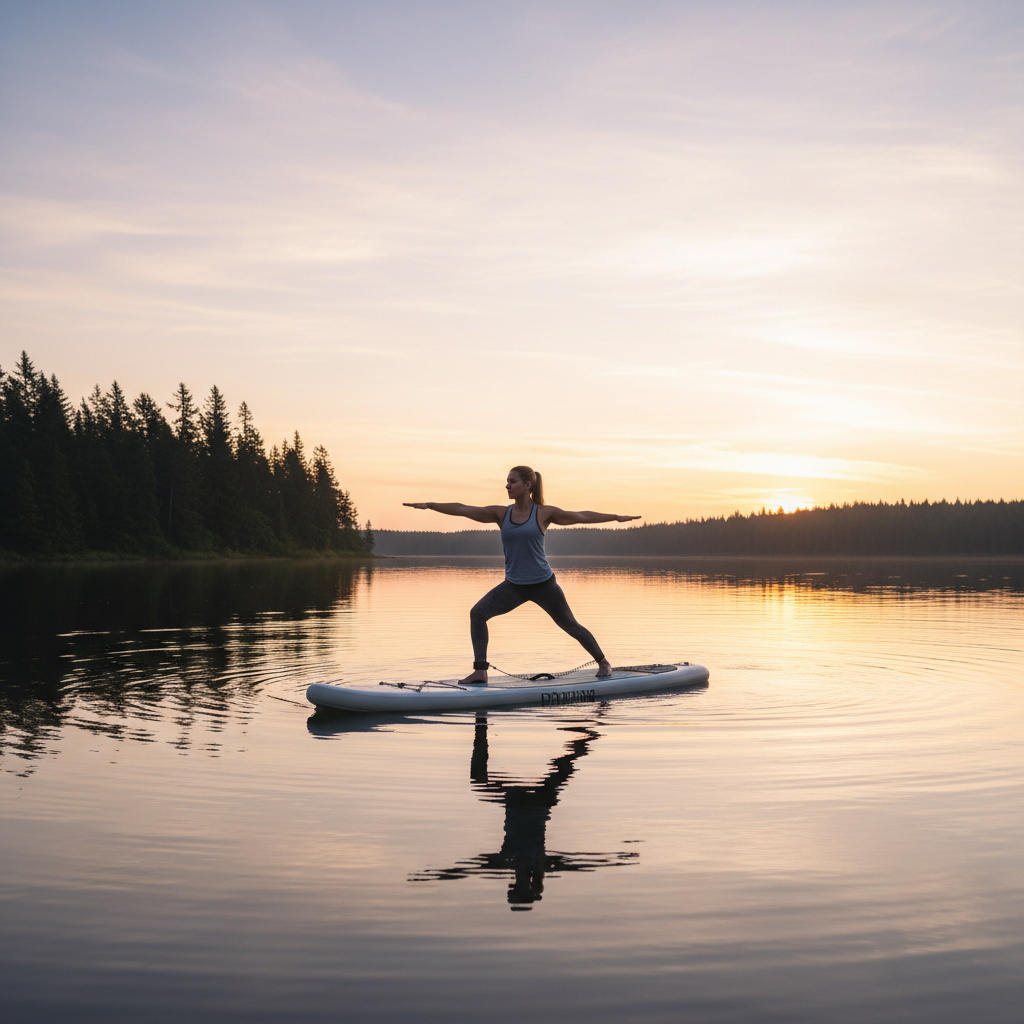
Gym routines can often feel boring, but taking your workout outside near a lake or ocean changes the whole game. An inflatable stand-up paddle board is no longer just something you use on holiday; it is becoming a genuine piece of fitness equipment. Trainers have always commended these boards for their portability and durability. So, wherever there is water, you can train; even a calm morning on a lake can be turned into a vigorous session.
Why Decide on an Inflatable Board for Fitness?
Using an inflatable stand-up paddle board gives you a fantastic all-body workout. Since water is always shifting, your body has to make constant, tiny adjustments to stay balanced. This results in the activation of your stabilizer muscles, especially in the core, legs, and back. Instead of running on the pavement, which is a high-impact exercise, paddling is quite gentle and feels like a low-impact exercise. And as if that is not enough, an inflatable stand-up paddle board is great because you can go on a hike to a secluded lake, or it simply fits in your small apartment.
Workouts to Incorporate When on Water
You do not necessarily have to paddle. With an inflatable stand-up paddle board, you can get creative and turn the board into your gym mat, using what your gym instructor has been talking about.
- SUP squats: The feet should be positioned such that they are parallel and about a shoulder-width apart. When lowering the body towards the ground, keep in mind that even though the board is stable, there will be very slight movements. Therefore, you can expect your quads and glutes to get more work.
- Power paddling: Power paddling at short intervals is very good for your heart and overall physique. It also builds a muscular upper body.
- Planks: Planks are among the most underrated exercises, yet they engage many muscle groups. On the board, you can hold the plank position. The stabilizers have to work overtime when the waves twist the board slightly.
Remember to Be Careful When on Water
Before finalizing a plan for when and how to get on a paddle board, ensure that the safety checklist is thoroughly checked. Be sure to have the leash on and attached to your ankle at all times, as well as a wearable, certified personal flotation device. You are on an inflatable stand-up paddle board, so you have to understand and watch out for the wind. Inflatables float higher on the water and can be more difficult to control when the wind is blowing strongly compared to rigid boards.